
Updated 01-05-13. The other day I was chatting with my Phở buddy Tim and something interesting came up. The subject was pho obviously, but the context was "what is pho?" or more precisely, "what Vietnamese soupy noodle dish can be considered pho?" Because there are so many varieties of Vietnamese noodle dishes, many of them using the same noodle and similar looking broth, it can be confusing for newbies. Well I'm here to set the record straight once and for all.
Here's one of the most important statements I'll ever make:
Not all Vietnamese-noodle-in-hot-broth-in-a-bowl dishes are Phở.
That's right. This simple phrase will alert non-Vietnamese to the possibility that what they're looking at may not be pho at all. If you remember just this phrase, plus a couple of tips I'll give at the end of this post, then you'll stay out of pho hell for sure, plus you'll be able to identify pho or otherwise a different type of noodle dish like a pro, or a true Vietnamese, or a pho connoisseur, whichever applies. Let's look at a few examples below, but don't look too long because you'll get nauseated knowing you can't have a bowl right now.
Below are pho bo and pho ga (beef pho and chicken pho).
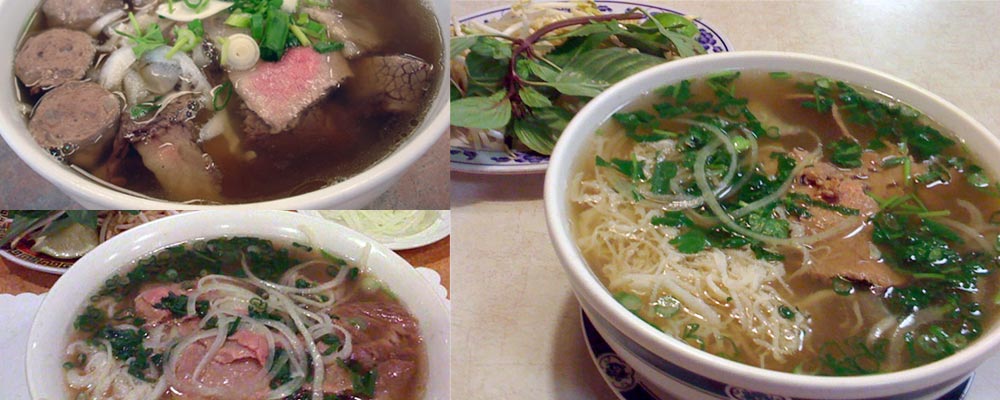
These are beef pho.

These are chicken pho - side chicken and dipping fish sauce optional.
And these below are not pho. They're various other kinds of noodle with their own names such as hu tieu and bun bo Hue. They cannot be called pho, in the same sense that sashimi cannot be called sushi.
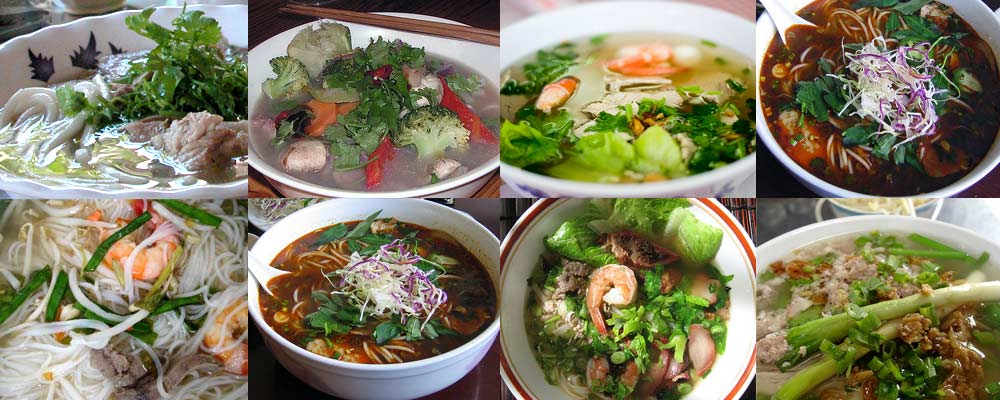
These are not pho. They're hu tieu varieties (same noodle as pho, light broth), and bun bo Hue (round noodle, dark broth.)
Since you're viewing this post on a computer and they haven't yet invented a way to smell/sniff what you're looking at on the screen, too bad we can't decide based on aroma as an indicator (although if you can, it's one of the best way to identify pho even with eyes closed). You can't mistake pho's aroma. One little whiff and you'll know it's pho.
So here are a few general, but reliable, tips to identify if it's pho or not (with exceptions as noted below):
- If you don't have beef or chicken, then it's not pho.
- If you have fish, shrimp, pork, octopus, goat, etc., then it's not pho.
Exceptions:
- Pho can be ordered without meats, or with meats on the side (e.g., rare beef, chicken or beef balls) in which case you'll need to validate by some other ways.
- Pho chay (vegetarian pho) which is normally served at Buddhist temples, vegetarian restaurants, or at many regular pho places. Pho chay looks and tastes somewhat different from the real pho, but it is considered pho regardless.
- If you're at a restaurant and the menu specifically says such pho dish is a specially created dish, or otherwise acknowledging in some way that it's not a regular pho, because they have meats other than beef or chicken in it, then conditions 1. and 2. above can be relaxed. The idea here is a chef has every right to be creative with his/her food, and if the chef makes a clear distinction of what is authentic pho and what falls under the creative license arena, then it is totally acceptable. For an example of such case, head on over and read Tim's post on Baltimore Pho. You'll enjoy it.
So there you have it. I think it's important to distinguish real pho from the misunderstood pho, because authenticity is important for cultural, social and institutional reasons. By the way, hu tieu and bun bo Hue are also two of my favorite Vietnamese noodle dishes - love to eat them every chance I get.
What's been your own experience on pho-looking pho and non-pho looking pho? (hope that makes sense). Share with us your opinions.



Yes I wouldn’t be surprised that’s what they used to serve you @dhalsim2. If you can find a place making great vegan broth then you are covered for any day of the week. Otherwise, staying away from pho for 24 hours on a Friday is not so bad 😉
ridiculous article. Pho is delicious and the preparation of the broth makes it that way. What audience is concerned about recognizing it? Sounds like a snobbery article
Better to just talk about what makes these dishes so good
I
@Tom: Note that the article was published more than 12 years ago, and the world of pho was actually very different back then. Thanks for your comment anyway.