
 Updated 12-30-18. Ordering a bowl of Vietnamese pho is as easy as eating it. The one rule to remember is to just order what you want, if you know what you want, that is. So if you didn't grow up eating pho, or you may even have ordered pho yourself before, here are a few tips to enhance your pho eating experience and order pho like a pho expert.
For those who need a little help with pronunciation, check out these posts:
- Ordering by the number is for... the novice. Actually, you don't need to look at the menu if you're going to have pho. Don't worry about the seemingly endless choices of pho on the menu, and certainly don't order by the numbers. As soon as you sit down at your table, you're ready to order. In fact for the best and quickest service, don't tell the server to give you a minute or two. Just know what you want and the restaurant would appreciate your quick decision. Really, there is a beef and there's a chicken variety of pho, what you could one want? Or if you must have vegan pho then just ask them. Just don't mention any seafood or shrimp pho here; they don't exist in the lovingpho.com world.
- Pho menu. If you must look at the menu then the following can help. There can be up to 20+ items for pho, but there are really 4 varieties you'd care about.
- By far the largest group (first 15 or so) is for pho bo (beef pho) which you can order in any combination and permutation of meat cuts (see 6 and 7 below). The first and second are almost always reserved for Pho Dac Biet Xe Lua (locomotive size combo-everything including the kitchen sink) and Pho Dac Biet (large size combo). Beside Xe Lửa (locomotive,) Vietnamese also use other large metal man-made machines to denote "very large" size pho bowls, so you may find such item as Phở Tàu Bay (airplane,) Phở Hàng Không Mẫu Hạm (aircraft carrier,) and Phở Xe Tăng (a tank, as in the panzer.) Ha ha, we were in a war, you know.
- The rest are just various combinations of available meat (beef) types. If you want something not on the menu, just say it. For example, if you want pho bo with absolutely no meat, then they'll make it for you. Parents order these for kids all the time.
- The next group is pho ga. There are not that many ways to do pho ga, so you may have 1 or 2 items here.
- Pho chay or vegetarian pho. For restaurants offering real pho chay (absolutely no meat, using separate preparation and cooking utensils), a few will show up at the end of the pho group on the menu or in a specialty section. If pho chay is not on the menu and you still want some, then just ask them. It's a good chance that they have them.
- Easy choices: pho bo or pho ga. There really are 2 types of pho, beef and chicken. You want to decide which pho you want. The default is always pho bo.
- Bowl size. Most pho places will have regular and large sizes, with kid size if you really want it (or just order a larger size with an extra bowl to share with the young one). Pho Dac Biet Xe Lua mentioned above is really the combo in large size, while the Pho Dac Biet is just a combo regular size. If you're lucky you will find a restaurant that will go out of its way to give you more food than you want. Check out my friend Mason's post on "Pho Hoa Thai: Bay Area Pho" or my own "Biggest Bowl of Pho I Ever Had: North York, Toronto." A side note: Some years back you could even find "Pho hang knong mau ham" which translates to aircraft-carrier-size pho, the mother of all pho! Or if you're in the Bay Area, Pho Garden's Pho Challenge has got the size you want.
- Ordering pho ga. If you want pho ga, you'll have one of 2 scenarios:
- White meat chicken pieces already in the bowl when served, or
- White or dark chicken meat (bones on) on the side with a side ginger fish sauce for dipping. Run-of-the-mill restaurants will only serve the first choice mentioned above, but good pho shops will offer chicken on the side. Rarely will a restaurant do both; there's no reason to do the former when you're already offering the latter. And if they have free-range chicken: extra goodness!
- Ordering pho bo. If you want pho bo, it's still pretty simple. Here's what you need to know:
- You can mix and match any of the available cuts and types of beef, regardless of what the menu says.
- Available are:
- bò chín (sliced well-done flank or brisket),
- bò tái (sliced rare tenderloin, eye of round, or ribeye),
- nạm (flank),
- vè dòn (crunchy flank),
- gầu (fatty brisket),
- gân (tendon),
- sách (tripe) and
- bò viên (beef meatballs, with or without tendon).
- You can order bò viên and bò tái as side dishes. Bò tái slices are raw to be dipped in the hot broth at the table by the pho consumer. Just be aware that restaurants may refuse to offer this due to health department regulations.
- Other options. You'd never guess but there are ways to further customize your pho. This is what the pho connoisseurs do. Depending on your preferences, and if you have a good restaurant that knows how to serve pho, just ask for any of the following:
- Nước trong (non-fat broth, this is what everyone gets by default),
- Nước béo (fatty broth, with extra fat, yum...),
- Tái sống (very rare meat),
- Ít bánh (less noodle, "banh" refers to "banh pho" which is of course the pho noodle itself),
- Nhiều bánh (more noodle),
- Ít thịt (less meat)
- Nước béo hành trần (fatty broth with blanched onions on the side),
- Giá chín (side order of steamed bean sprouts),
- Không hành (no scallions),
- Không hành ngò (no scallions/cilantro),
- Không hành tây (no onions),
- Hành
giầmdầm giấm (thinly sliced onions in vinegar, on the side)
You're now ready for some real serious pho adventures. For most people a regular size bowl of pho bo is totally sufficient. But for a few, getting pho exactly right can only be achieved by ordering pho their own way. If a restaurant doesn't serve as described in these tips, then their pho quality may be questionable.
So have fun on your next pho outing. And let us know how you make out.

OK, now we know what we like in our pho, but we really can only pronounce pho itself. How can we order all those variations without sounding like fools? Any chance you’d create recordings showing the variations (not all possible combinations of course, just the basics and we can combine whichever parts we’d need). Which do you think is worse: ordering by the numbers, ordering in English, or ordering in mangled Vietnamese?
Thanks.
@Barb Carter. Hi Barb, thanks for the excellent thoughts. I’ve been pondering the idea and your post just pushed me over. It’s not much trouble so I’ll do something and will post them.
I think ordering by numbers is easiest but it’s the worst case. It shows nobody cares about anything, with laziness being the common thread between the customer and the order taker. Time’s changed and we can all do better.
Next is ordering in English. It may be easier for the customer (non-Viet speaker) but makes it much harder for the restaurant; it will slow everyone in the service chain, from the order taker to preparer in the back to the server to the cashier. Plus it doesn’t sound quite right in my opinion.
So we’re left with mangled Vietnamese, but I think it’s the best scenario because we can do so much with it. I admire those who make the effort because it shows the will is already there. The only thing left is a little technique and coaching. From the restaurant’s viewpoint, it’s the normal way their largest group of clientele (Vietnamese) orders anyway. Plus it makes for a fun atmosphere.
@Barb Carter. I’ve just posted a new post showing pronunciation of typical pho permutation and combination that one usually finds on a pho menu. It’s called “How to Order Pho in Vietnamese.” Thanks for your suggestion and enjoy.
I would like to order a soup number #6 raw steak will down.
i hate the taste of coriander and i am going to vietnam next year how do i say in vietnamese( no coriander or no cilantro please)
@jay: Not sure what you mean, but we do not take orders online via these comments. I think you have better chance at your local pho restaurant.
joe derose asked the following question and I want to share with you all:
Subject: What am I ordering?I’m a newbie to pho but I’m always willing to attempt to order a dish properly without pointing to numbers! 🙂 If I order pho bo chin and pho ga nhieu banh what will I get? I’m hitting Pho Xe Tang Tank Noddle in Chicago in a few weeks and want to be prepared. Thanks!
Answer: @joe derose:
“pho bo chin” means beef pho with well-done beef.
“pho ga nhieu banh” means chicken pho with extra banh pho noodle.
You can see the post content above for more detail. Have fun with it, though many Westerners pronounce with such a strong accent that the server may be clueless about what you’re trying to say 🙂 . You may want to also check out Pho Pronunciation – How to Order Pho in Vietnamese.
I find that I often make the effort to order in Vietnamese and the waiter says “OK. Number 3” and may even write it that way on the order as it’s easier than listing all the ingredients.
By the way, you really need to add diacritics to the words listed. Without them there’s no chance of pronouncing them correctly.
@Jim Gottlieb: That’s a good point. Ordering by number is always easier for the order taker and the kitchen staff. It’s one of the reasons to prevent mistakes. The funny problem is, unless one orders the same thing all the time, on many occasions I witnessed a customer remembering neither the number nor the toppings of what he ordered, when the bowl came out. So neither method is perfect I guess.
The diacritics are now on. Thanks for pointing it out. This is an older post that I never got around to updating. Maybe I’ll consider adding audio recordings so readers can hear their pronunciations like in the pronunciation posts.
im gonna get my ass kicked by a dai ca for trying to speak his tongue dude. lmao.
Hi Cuong, you very detailed described how to order the different cuts of Beef Pho, but how I order Pho Ga with:
– white meat from breast
– dark meat from leg
– skin
– liver, heart
– giblets etc.
Thanks for your kind answer
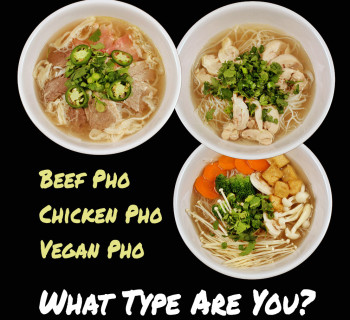
@Stefan: Thanks for your comment. Pho Bo is by far the most popular and garner the most attention among Viet and non-Viet eaters alike. For this reason I concentrate more on Pho Bo on this site. Check out this post about what type of pho people like to eat: What’s Your Pho Type, Beef Pho, Chicken Pho, or Vegan Pho? .
Due to the lower market demand, pho restaurants no longer go through the trouble of serving pho ga this way. This is true for pho restaurants in North America, and probably the same way in Europe or Australia. As a result, it can be hit-and-miss, maybe more on the miss side at a given pho restaurant that you walk into. If you do find one, then it can be a very rare situation, and I’m not sure how long it will last. In Southern California, one of the well-known places serving “proper” pho ga was Pho Bolsa – Second To None Pho Ga (Chicken Pho) . Unfortunately, they are no longer in business.
By the way, the way you list “Skin” as a separate item implies that skin may be ordered separately. I don’t think even Viet people actually order or want chicken skin as a separate item. If you can get chicken separately as dark or white meat in the way we’re talking about, then the skin will come with either choices. Also, the liver, heart and other internal organs of a chicken are part of the giblets, so if you can get some then you’ll most probably get all of the giblets.
I’d be more than happy to answer any specific question you may have, if I can. Cheers!
@Cuong: Thanks for your prompt reply. I realize that this specification of Pho Ga is neither in US nor in Germany – where I’m based – available. But I’m writing an article about ordering Pho in Vietnam and would like how you say these demands for different kinds of meat in Vietnamese.
@Stefan: I think I understand your request. If by “how you say these demands” you mean audio recordings (as was done in other pronunciation posts, such as Pronunciation of Pho and Other Vietnamese Words and Phrases, Part 2), then I can do that at the next available opportunity I have to post a new post, or add to one of the existing pronunciation posts. If I’m still not correct then please clarify further.
I understand, but before you start the audio recording (wonderful idea) just be so kind to tell me the Vietnamese words for “white meat”, “dark meat” and intestines. Thanks for your help 🙂
Ok I misunderstood. You should have asked for the translation instead of “how you say” which made me think you want to hear the pronunciation.
In Vietnam, we don’t say dark meat and white meat. We say leg/thigh meat and breast meat. It’s not about the meat color but more about what part of the chicken the meat comes from. So leg/thigh meat is thịt đùi or đùi gà (thịt = meat, đùi = leg) and breast meat is thịt ức or ức gà (ức = breast of any kind of fowl, of which chicken is a part). Most of the time, saying đùi or ức is enough if the context of chicken food is understood.
In general, lòng gà is used to describe the edible chicken internal organs, including the heart, liver and gizzard. If you want to be specific about the intestines, then they’re called ruột gà.
Hope this helps.
@Cuong: That’s what I wanted. Thanks so much and sorry for expressing not clearly. I will mention your site as author in my article. Cheers Stefan
No problem at all Stefan. I look forward to seeing your article.
By the way @Stefan, I’m just curious. How do you refer to these chicken meats in German? Do you use dark/white meat (or something similar) or do you just say what they are (leg, breast) like we Vietnamese do? Thanks!
@Cuong, mostly we don’t have the choice 🙂 so we get either skinned breast – preferred by Germans – or we get drumsticks. If people make a curry, stew or soup they use in most cases white breast, sliced against the grain.
Only a few understand the difference between the different parts of the chicken and they will say leg, breast etc. For the majority the main thing is to have white meat, no skin, no bones 🙂 But I think it’s the same in the States.
What does giầm mean in “Hành giầm giấm” or is it hành dầm/ngâm giấm?
@E: Giầm, or more correctly, dầm, normally means “pickling” and ngâm means “soaking”, so the 2 words means essentially the same thing. If one wants to dig deeper then the finer point lies in how it’s done, what technique is used, and for how long. In the context of the vinegar onion on the side in this article, all it means is the onion is thinly sliced, then soaked in vinegar solution (recipe varies from pure vinegar to various mixtures of other ingredients), then served at the table.